Incoming material management in electronics manufacturing
- why this first step matters more than you think
In electronics manufacturing, a lot of attention naturally goes to what happens on the SMT line itself. Placement speed, line balancing, traceability, inspection and throughput all play a major role in day-to-day production. But long before a reel is loaded onto a feeder or a work order is released to the line, another part of the process has already set the tone for everything that follows: incoming material management
When components, reels and other production materials arrive at your facility, the way they are received, checked and registered has a direct impact on:
- stock accuracy
- traceability
- and production planning.
If incoming materials are handled manually, inconsistently or without clear system support, the result is often a familiar one: missing information, time-consuming checks, uncertainty around stock status and a higher risk of material-related disruptions later in the process.
For EMS and OEM manufacturers alike, that first registration step matters more than it may seem.
It is where material data enters the system, where delivery information is confirmed, and where the foundation for reliable traceability is created.
Why incoming material handling matters in EMS and OEM production
In a modern electronics production environment, incoming goods handling is about much more than receiving boxes and putting materials on a shelf.
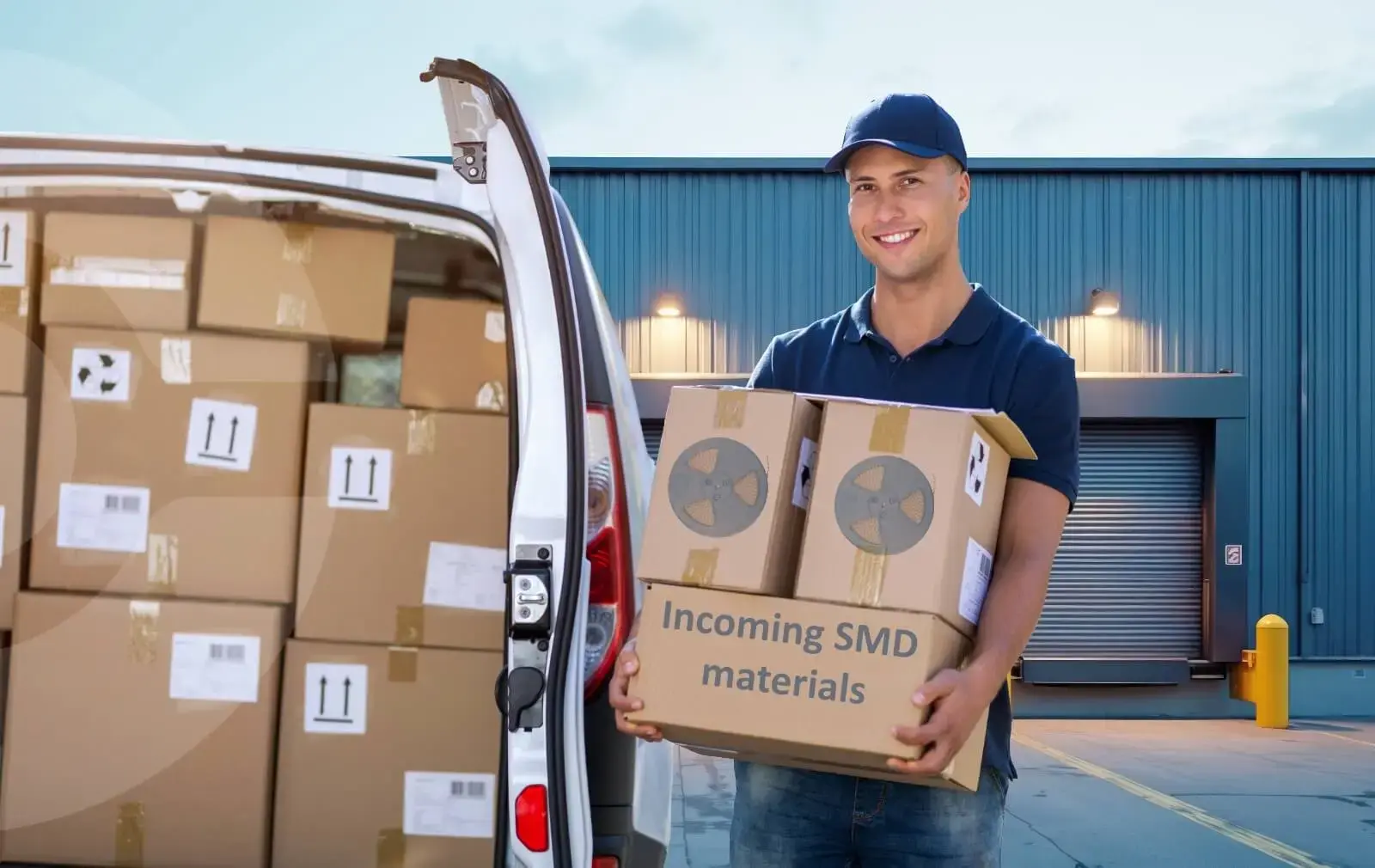
The first step is getting clarity on the practical questions around the materials arriving at your facility
- Did we receive the full delivery against the purchase order?
- Are the quantities correct?
- Has the material been registered in a way that supports later traceability?
- Is the material ready to be stored, picked and released to production?
- Now, do we have the component in stock needed for planned production jobs?
If the answer to those questions depends on manual spreadsheets, paper notes or time-consuming follow-up between warehouse and production, the process quickly becomes vulnerable.
It only takes a few small gaps in your material registration to create uncertainty later on
- A reel that has not been correctly identified.
- A delivery that has been partially received but not clearly documented.
- A component that appears to be in stock in the ERP, but in practice cannot be found or released with confidence.
- A work order that is expected to start, only for production to discover that one a key component was never received.
These are exactly the kinds of issues that strong incoming material management is designed to reduce.
The incoming station is the first control point in the material flow
For manufacturers who are not yet familiar with storage solution systems, it can be helpful to think of an incoming material station as a dedicated control point between supplier delivery and the rest of the factory’s material flow.
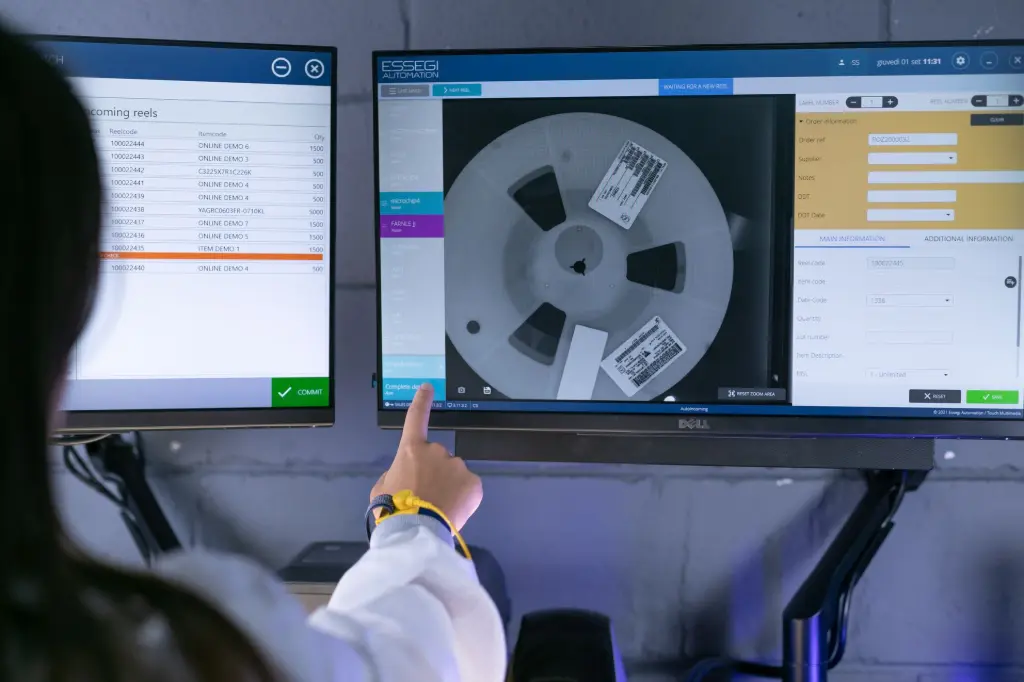
Instead of receiving goods in a loosely structured process, the incoming station creates a defined place where materials are:
- checked against purchase orders or expected deliveries
- identified and documented
- scanned and registered in the system
- labelled with unique information
- prepared for storage and later use in production
That may sound simple, but it has a big effect on the quality of the data and the discipline of the material flow. When incoming materials are registered correctly from the start, it becomes much possible to trust stock levels, locate components, support planning and maintain traceability throughout the rest of the process.
This is where solutions such as the Essegi ISM Incoming Material Station 2.0 come into the picture.
What the Essegi ISM incoming material station 2.0 is designed to do?
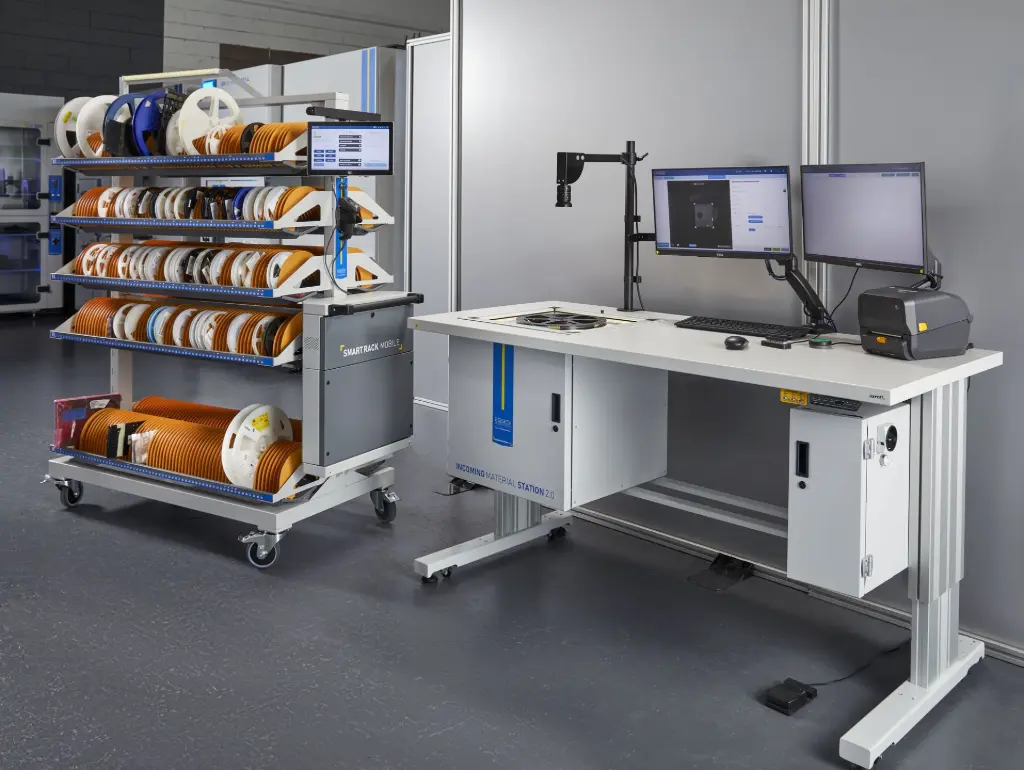
The ISM Incoming Material Station 2.0 is a dedicated and operator-friendly workstation for receiving, checking, registering and identifying materials before they enter storage or production.
With a structured process for incoming materials, an electronics manufacturer enables the essential traceability of their SMD materials. This ideal setup that gives you the full overview of the factories’ SMD materials - from its flow into the SMD storage to the time when its picked for production.
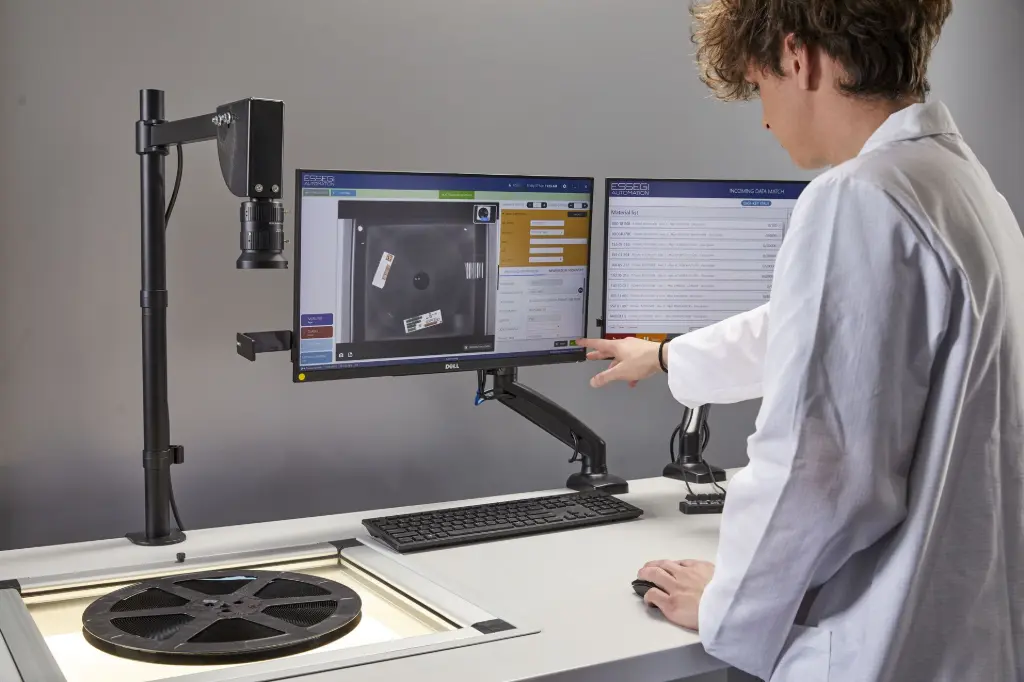
The station combines hardware and software elements that help operators capture and verify information efficiently, including:
- a large ESD-safe work tabletop surface
- high-resolution cameras and scanner setup for documentation and identification
- barcode reader
- printer for label generation
- ergonomic workspace design
- wheels for mobility and flexible positioning
- integration capabilities with company IT infrastructure
The value of that setup is not simply the hardware itself. The real benefit lies in what it helps manufacturers do in daily operations: create a reliable link between the physical material arriving at the factory and the digital information and trace that needs to follow it.
For production, warehouse and operator teams, the advantages of a structured incoming station are easiest to understand when you look at the tasks it supports.
From delivery to registration
-where the benefits become tangible
1st task
Checking received materials against the ERP purchase order
- Have all reels arrived?
- Are the quantities correct?
- Has a delivery been split?
- Is anything missing that could affect a planned order?
By registering incoming materials against ERP data, manufacturers gain a much clearer overview of what has been received and what is still outstanding. That makes it easier to react early if there are shortages or discrepancies, instead of discovering them later when production is preparing to start a job.
For EMS and OEM companies working with tight schedules, that kind of visibility can make a real difference. If you know sooner that a critical component is missing, you have more room to adjust planning, follow up with suppliers or avoid releasing an order that cannot be completed as expected.
2nd task
Registering incoming components before they enter storage
If materials enter storage without being clearly identified and linked to the correct system data, traceability becomes weaker from the outset. Operators may later need to spend time confirming where a reel came from, whether it belongs to a specific delivery, or how it should be connected to the production documentation.
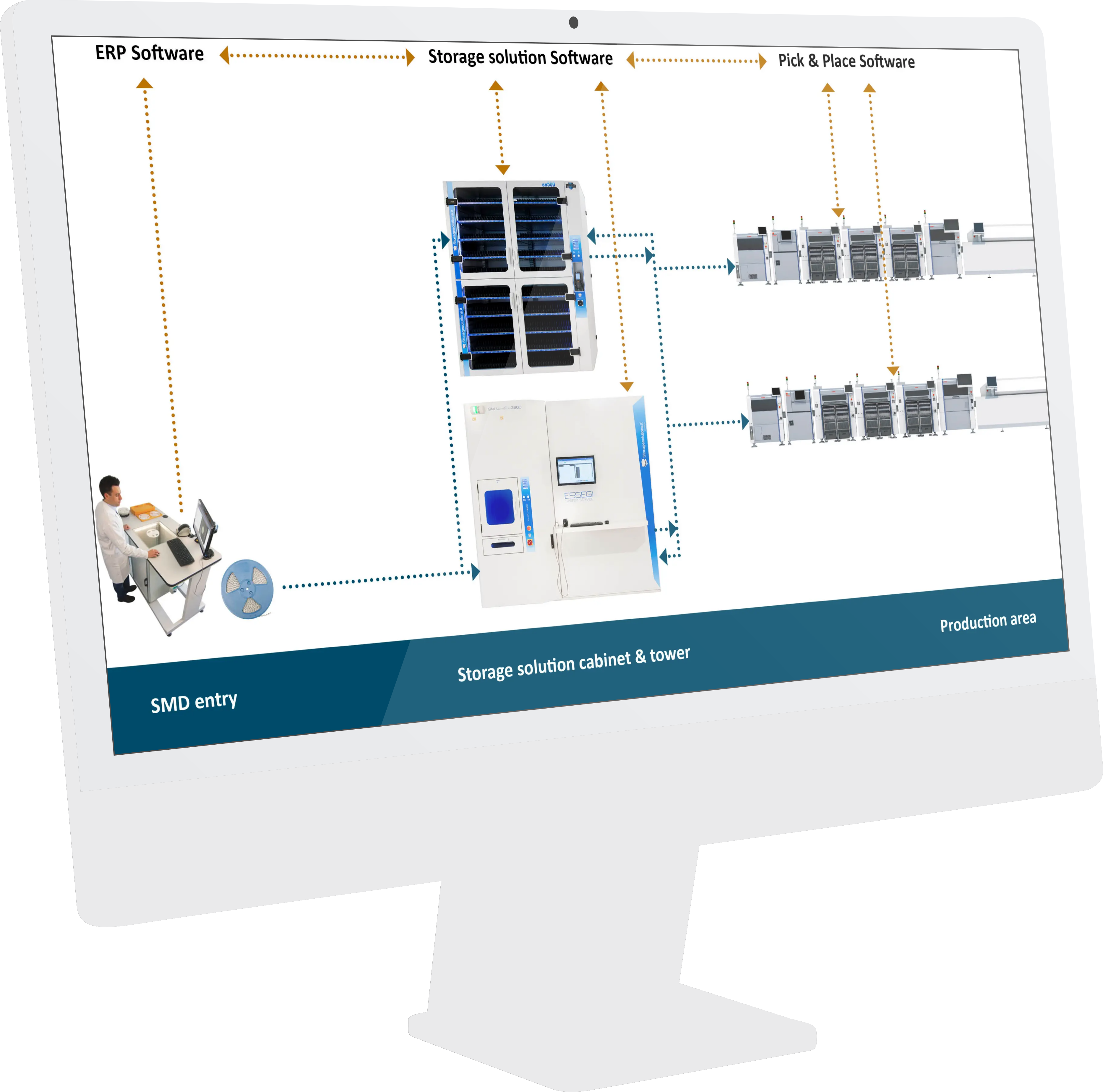
A dedicated incoming material station helps create a cleaner handover into the next step of the material flow. Materials can be received, documented and prepared before they are stored in a smart storage tower, placed in vertical storage or otherwise moved onward in the system.
That is one of the reasons the incoming station should not be seen as a standalone island. It plays an important role in the wider storage ecosystem, because the quality of the incoming registration affects everything that comes after: storage accuracy, picking, line-side replenishment and overall material control.
3nd task
Printing labels and assigning unique identities to each SMD
Clear identification is therefor one of the building blocks of good traceability.
Depending on the system setup, incoming material registration can support the assignment of a unique number to each item or reel. That creates a much stronger basis for traceability, because the material can be tracked as it moves through the process rather than being treated as an anonymous stock item.
For electronics manufacturers working with quality requirements, customer-specific traceability expectations or simply a need for tighter process control, this is a meaningful improvement. It reduces ambiguity, improves documentation and makes it easier to connect physical materials with the data used by ERP, MES or other enterprise systems.
Benefit
Documenting materials before they are released to production
Before components are made available for work orders, the incoming station can help ensure that they have been registered, documented and prepared correctly.
That may include barcode scanning, image-based documentation, delivery checks and label creation.
In other words, it gives operations a better starting point before the material enters the active production flow.
This matters because many material issues do not actually begin on the line. They begin earlier, when a component enters the facility without the right information attached to it.
A strong incoming process helps manufacturers improve the quality of the information that follows materials into production.
Benefit
Avoiding missing materials for planned work orders
Real-time inventory updates and structured incoming registration help reduce that risk. When incoming goods are properly recorded as they arrive, stock visibility improves and the planning team has a stronger foundation for understanding what is actually available for upcoming jobs.
That does not just help warehouse teams. It also supports production continuity, because fewer surprises appear at the point where materials are needed most.
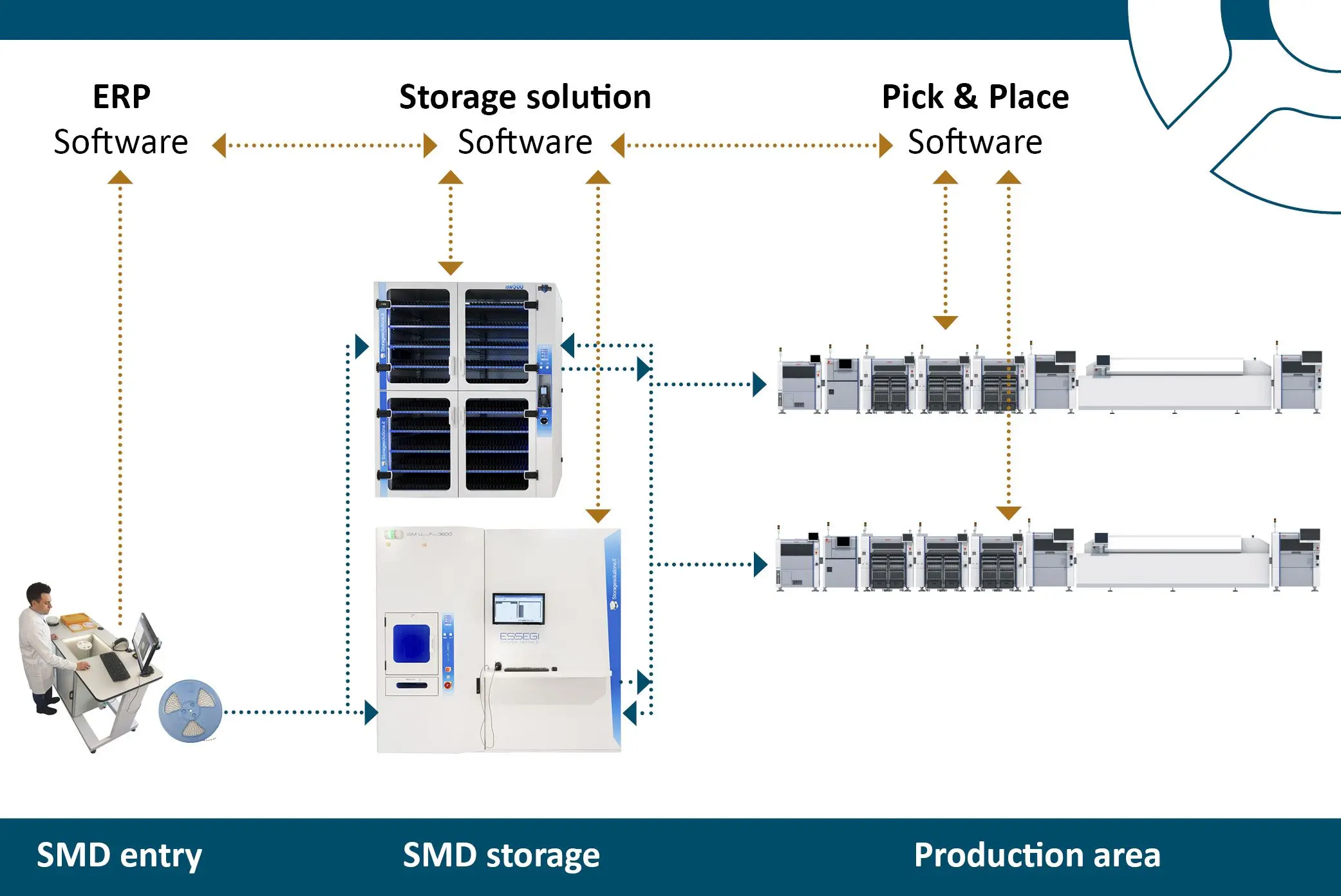
THE STORAGE SOLUTION WORKFLOW
More than an incoming desk: it is a part of a smarter storage and traceability strategy
For companies that are new to storage solution systems, it is worth highlighting that an incoming station like this is not only about making goods receipt easier.
Its real strength comes from how it supports the wider material handling setup and flow throughout the company.
In an electronics manufacturing environment, the incoming phase is only one part of a longer journey.
- Materials move from receiving to storage
- from storage to picking
- from picking to line-side preparation
- into production and traceability records
- after production all remaining materials is counted, quantity is updated in the ERP, MES software before return to storage again
If the first step is weak, the rest of the material journey becomes impossible to control.
That is why incoming material handling should be viewed in the context of the broader storage ecosystem, including:
- smart storage towers and vertical storage systems, where materials need to enter the system with correct data from the beginning
- line-side material flow, where planners and operators rely on accurate stock and identification information
- traceability across the full material journey, from goods receipt to production use
- ERP- and MES-connected material handling, where incoming registration supports reliable communication between the physical warehouse and the digital production environment
Seen in that light, the incoming station becomes much more than a practical receiving workstation. It becomes the first link in a connected material flow strategy.
THE STORAGE SOLUTION DAY-BY-DAY
Why the operator experience matters too
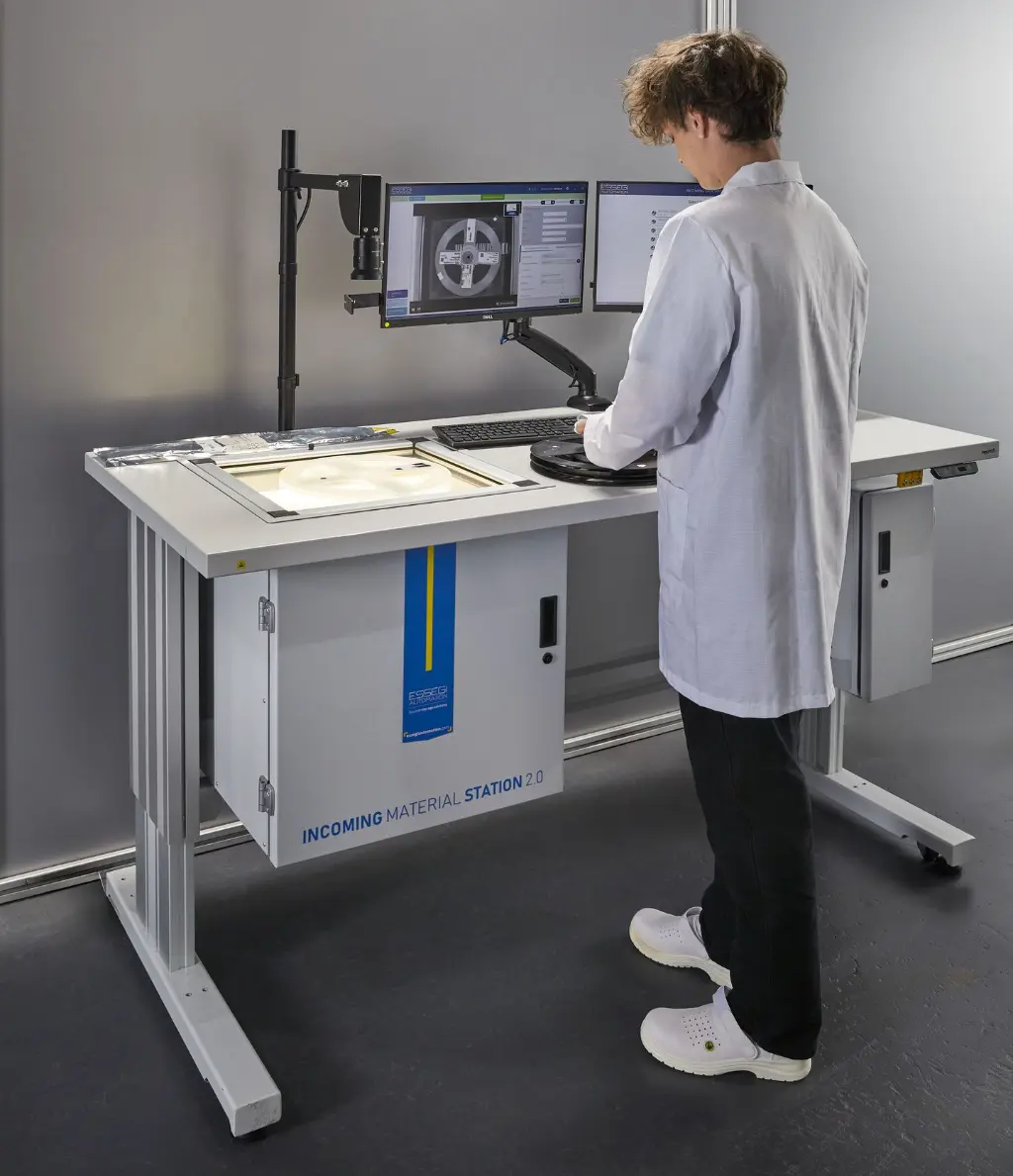
It is easy to focus only on software integration and traceability, but the physical setup also matters. Incoming goods handling is a daily operational task, and if the workstation is awkward, cramped or inefficient, that will affect both speed and consistency.
The ISM Incoming Material Station 2.0 has been designed with operator comfort in mind, with an ESD-safe work surface, ergonomic layout and a structure built for long-term use in production environments.
That matters because a process is easier to follow consistently when the workstation itself supports the people using it.
The automation side matters here as well. By reducing manual steps and streamlining routine tasks, the station can help free up operator time and reduce the risk of human error.
In a busy warehouse or production support function, that is often one of the most immediate day-to-day benefits.
THE STORAGE SOLUTION
A stronger start for every material that enters the factory
For EMS and OEM manufacturers, incoming material management may not always be the most visible part of the production setup, but it has a direct impact on some of the things manufacturers care about most: traceability, stock real-time accuracy, planning reliability and production continuity.
When materials are received in a structured, system-supported way from the very beginning, it becomes easier to build a reliable flow all the way through storage and into production. Deliveries can be checked more accurately, components can be identified more clearly, and the information surrounding each item becomes more useful to both warehouse and production teams.
The Essegi ISM Incoming Material Station 2.0 is one example of how that first step can be strengthened. Not by adding complexity for its own sake, but by helping manufacturers create a more controlled and connected way of handling incoming materials.
For companies exploring smarter storage solutions, better material traceability or more reliable material flow between warehouse and SMT production, the incoming process is often a very good place to start.