Fewer solder defects start with the right SMT screen printer
A Yamaha solder printer gives you the same clean print on board number 1 and board number 10.000
Bridges, too little solder, tombstones. When they show up at inspection, the cause is very often found at the start of the line: in the paste print. That makes your SMT screen printer the cheapest place to fix quality, before components are placed and before anything is soldered.
We have been a Yamaha partner since 2011 and help OEM and EMS manufacturers across Scandinavia and the Baltics choose, install and maintain the solder printer that fits their boards, their batch sizes and their people. Below you find the three Yamaha models we supply, and what each one does for your production.
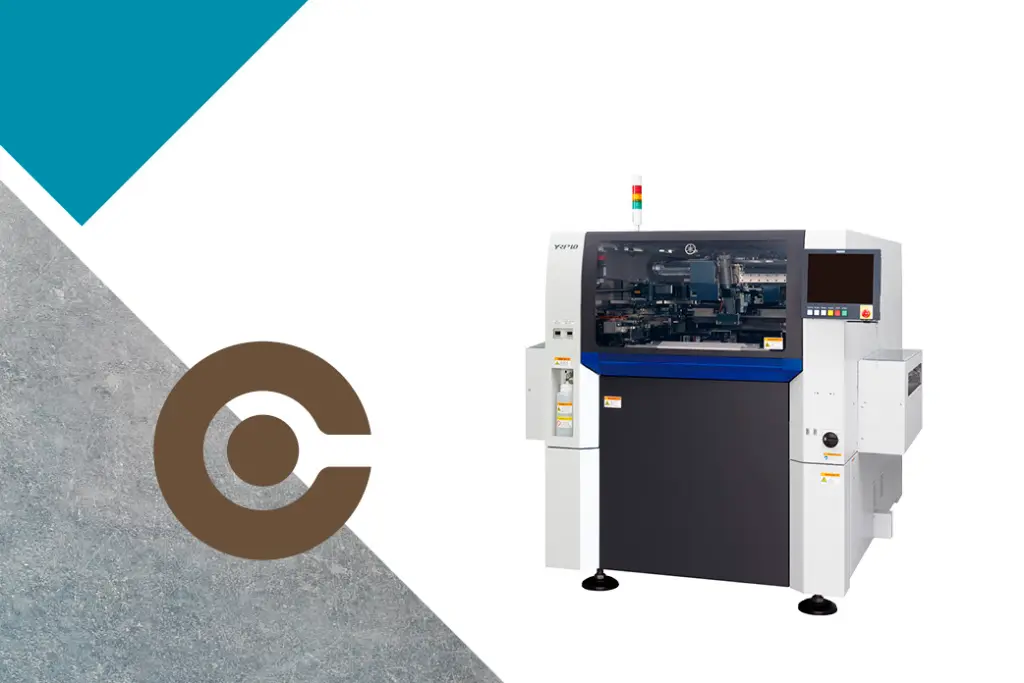
Yamaha YRP10 screen printer
Change product without changing stencils by hand. The premium SMT screen printer on Yamaha's YR platform can automate stencil exchange, push-up pin exchange and solder transfer. The dual-lane option runs two products side by side, with ±16 µm printing accuracy.
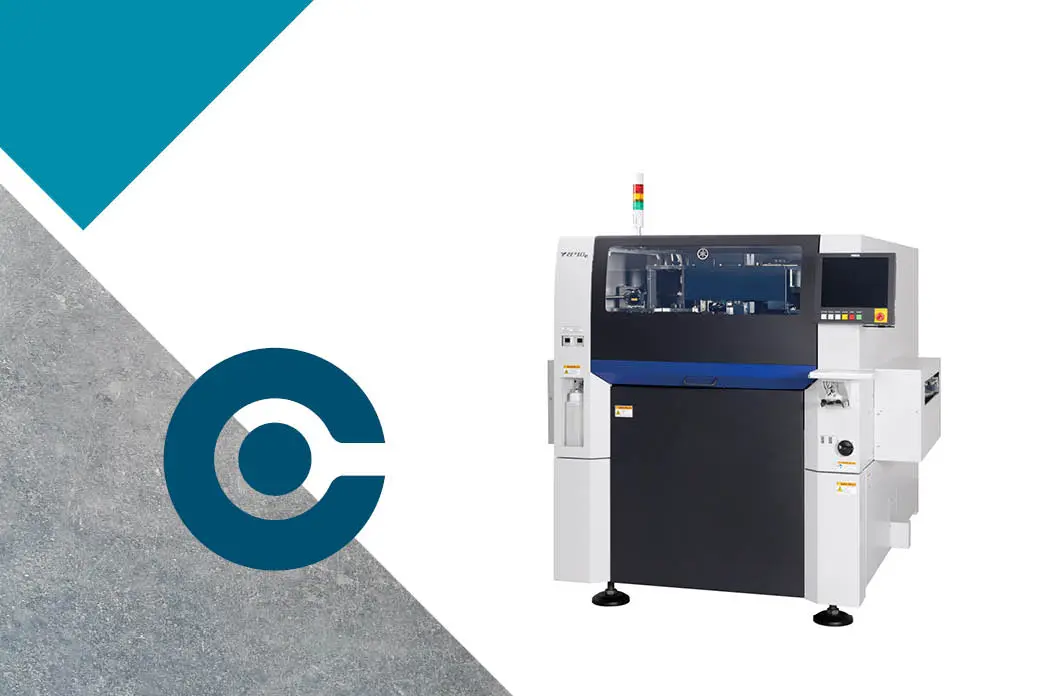
Yamaha YRP10e screen printer
Stable prints from day one, also for new operators. This entry-level solder printer has the 3S head, automatic stencil cleaning and a universal stencil holder that adjusts in one touch. Handles boards up to 510 x 510 mm with ±30 µm accuracy.

Need price or second opinion?
Tell us about your boards, your volumes and how often you change product. We tell you honestly which solder printer matches your production, which options are worth having, and which ones you can safely skip.
No obligation, just a straight answer.
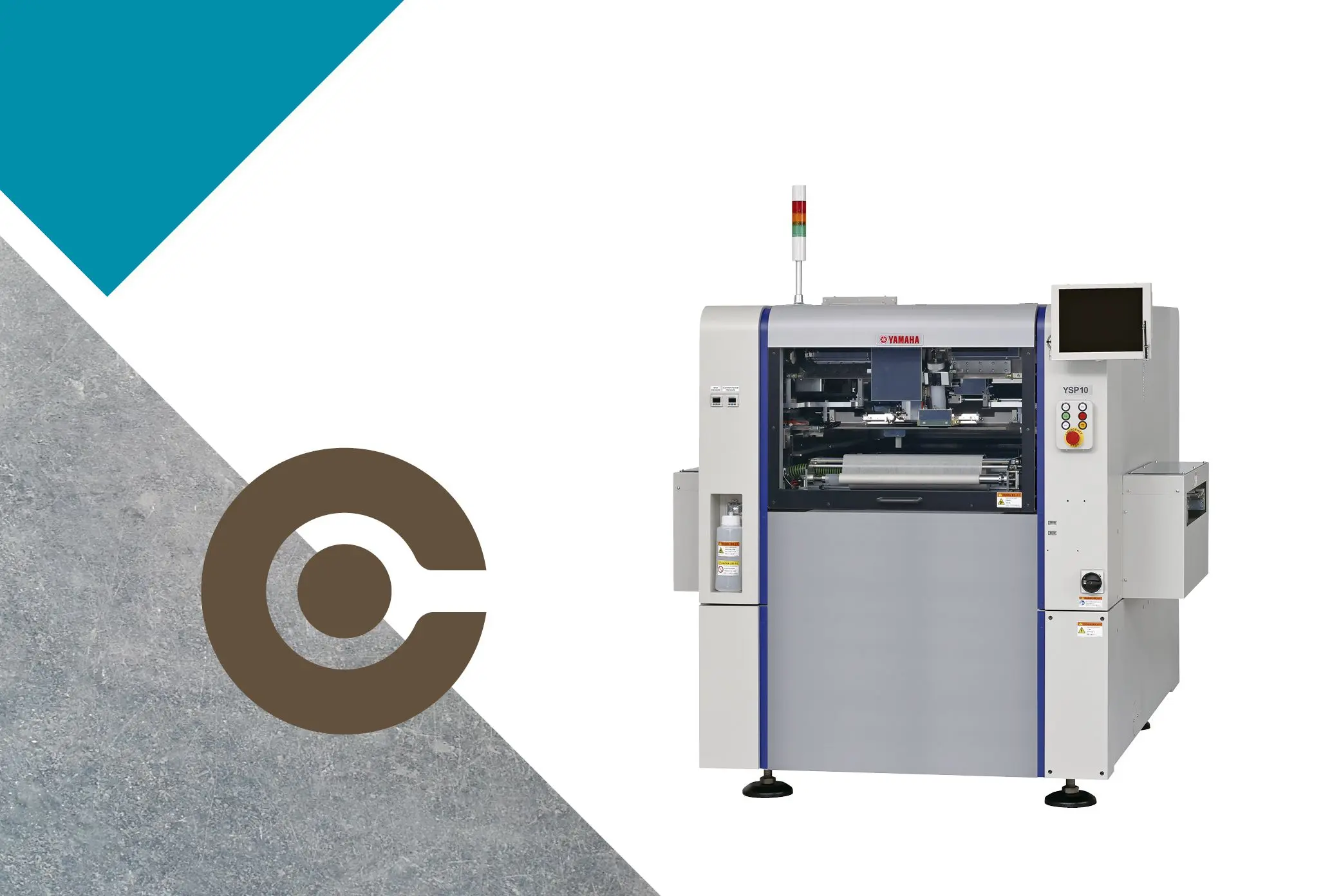
Yamaha YSP10 screen printer
Room for the big boards, and a firm grip on the stencil. This durable SMT screen printer takes PCBs up to 610 x 510 mm.
Stencil vacuum keeps the stencil steady, and squeegee force is feedback-controlled for an even print every time.
Article: Ideal solder application
Less paste wasted, less time spent fine-tuning. All newer Yamaha printers use Yamaha's 3S head, Swing Single Squeegee. Attack angle and speed are set per job to suit your paste, and the paste keeps rolling evenly, so the print repeats cycle after cycle.
Which solder printer fits your production?
The right solder printer depends less on the machine and more on your day: how often you change product, how big your boards are, and who stands at the line.
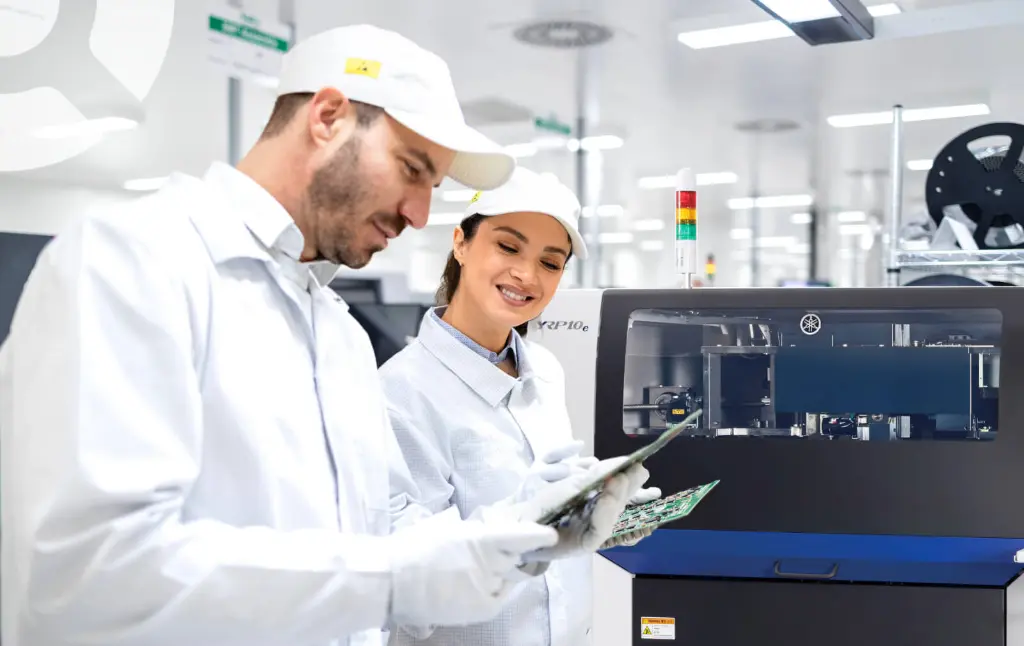
- You change product several times a shift, or run two products at once:
choose the YRP10. Automatic stencil and push-up pin exchange take the manual steps out of changeover, so your operators spend less time on it and the line is back in production sooner. Dual lane lets you print two products in one machine. - You want a simple, reliable start:
choose the YRP10e. It is an SMT screen printer with a short learning curve, which suits a first line, a prototype line or a team where several people share the machine. - You build large boards:
choose the YSP10. It takes PCBs up to 610 x 510 mm, where the two YRP models stop at 510 x 510 mm.
All three take stencils up to 750 x 750 mm, clean the stencil automatically and can be fitted with a 2D print inspection camera that checks the print before the board moves on. They also share the 3S head and Yamaha's factory software tools, so the way you set up a job is familiar from one model to the next.
Still in doubt? Send us a typical board and your yearly volumes, and we go through the options with you.
Would you rather see a solder printer than read about one? Ask what is on display in our showroom right now, or book a demo.

Screen printer articles
About solder printers and stencil printing
Want to dig deeper before you decide?
Our articles cover the printing process, paste handling and the features that make a difference on the production floor.
Read more about solder printing >
Get more out of your SMT printer
Even the best solder printer can only print as well as the conditions allow.
Three things lift the result
A PCB cleaner conveyor in front of the SMT screen printer removes dust and particles before they end up under the stencil.
Aperture design and stencil thickness decide how cleanly the paste releases onto the pads, and a well-made etched stencil gives the printer the best starting point.
SMT equipment needs service at least once a year. Our service engineers look after the equipment we supply and can train your operators, too.
FAQ
It presses solder paste through the openings in a stencil and onto the pads of the PCB, so every component gets the right amount of paste in the right place.
Yes. Screen printer, stencil printer and solder paste printer are different names for the same machine in an SMT line.
The 2D camera in the printer catches the obvious print errors. If you also want to measure paste volume and height, add 3D solder paste inspection (SPI) right after the SMT screen printer.