Soldering robots for automated PCB assembly
Improve solder quality while reducing manual work with soldering robots
Manual soldering remains an important part of electronics manufacturing, but it also depends heavily on operator skill, consistency and availability - this is where a soldering robot comes in handy.
As production volumes grow or quality requirements become more demanding, many manufacturers choose soldering robots to automate repetitive soldering tasks while maintaining the flexibility of hand soldering.
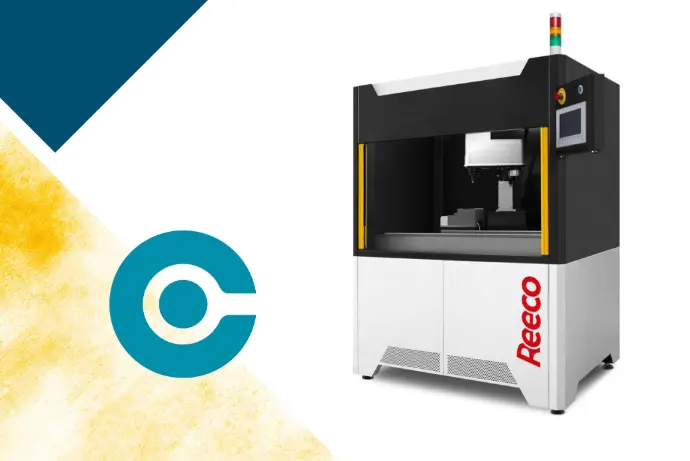
RE-2100
Soldering robot
1 head - 4 axis soldering robot | Reeco's automatic soldering robot comes with a YAMAHA robotics arm, and works like a stand alone unit, or can be implemented into a line as it contains conveyor.
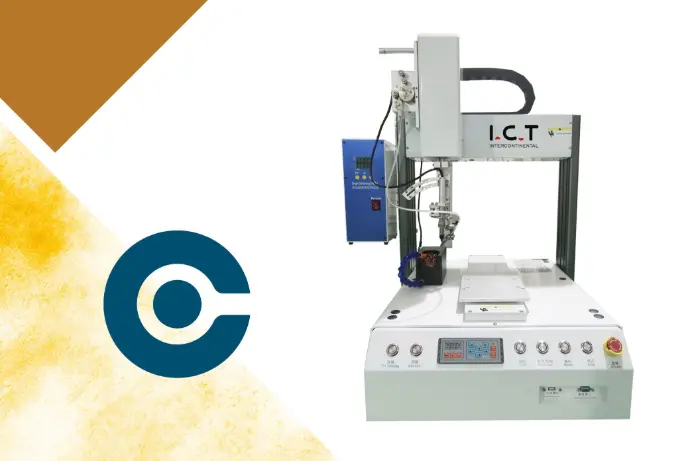
ICT SR300
Soldering robot
1 head - 4 axis soldering robot | The automatic soldering robot SR300 is a one head soldering robot with 4 axis. See product video and learn more about this table soldering robot.

Price or more soldering robot info?
Contact us | Whether you are automating PCB soldering, cable assemblies or connector soldering, we can help identify the solution that best matches your production requirements.
Soldering robots
in focus
Where are soldering robots used?
Soldering robots are used across a wide range of electronics manufacturing applications where repeatability and process control are essential.
Typical applications include:
- PCB assembly
- Through-hole component soldering
- Wire and cable soldering
- Connectors and terminals
- Shield cans
- LED assemblies
- Sensor production
- Electronic modules
- Small electromechanical assemblies
Because every solder joint follows the same programmed parameters, manufacturers achieve consistent solder quality regardless of operator experience or production shift.
Benefits of automating manual soldering
For many manufacturers, investing in soldering robots is less about replacing operators and more about improving production stability.
Key benefits include:
- Consistent solder quality
- Improved repeatability
- Reduced rework and defects
- Stable process parameters
- Increased productivity
- Less operator fatigue
- Easier documentation and process validation
- Flexible programming for multiple product variants
The combination of precision movement, controlled heating and automatic solder wire feeding creates a repeatable process that can be validated and reproduced across production batches.
How do soldering robots work?
A soldering robot follows a programmed path that controls movement, soldering temperature, contact time and solder wire feeding for every joint.
Depending on the application, additional features may include:
- Automatic tip cleaning
- Vision-assisted positioning
- Fiducial recognition
- Force control
- Multiple soldering tools
- Offline programming
- Traceability and production data logging
The entire process is designed to deliver identical solder joints every cycle while reducing variation introduced by manual soldering.
Choosing the right soldering robot
The ideal soldering robot depends on your products, production volume and soldering application.
Important considerations include:
- PCB size
- Component layout
- Number of solder joints
- Cycle time requirements
- Product variation
- Required traceability
- Integration with existing production equipment
Whether you need a standalone robotic soldering cell or an automated solution integrated into your manufacturing process, selecting the right system starts with understanding your soldering application and production goals.
Get in touch, if you want more guidance.